
Allergies in Dogs: What to Watch For (and How to Help)

If your dog seems to be itching more than usual or has developed new skin or health issues, allergies may be the cause.
Just like in humans, allergies in dogs happen when the immune system overreacts to something in their environment. The three most common types are:
Flea allergies
Environmental allergies (like pollen, mold, and dust)
Food allergies (much less common than many people think)
The good news? Our veterinarians can help identify the cause and create a plan to keep your dog comfortable.
Signs of Dog Allergies
If your dog has allergies or an intolerance, you might notice:
Intense itching and scratching
Red, irritated skin
Chronic ear infections
Excessive licking
Vomiting or diarrhea
Gas or weight loss
Bacterial, fungal, or yeast infections
Are Some Dogs More Prone?
Allergies typically show up between ages 1–3, but they can develop at any time.
Breeds more commonly affected include:
Chinese Shar-Pei, Golden Retriever, Labrador Retriever, Boxer, Shih Tzu, and several terriers. But any dog, including mixed breeds, can develop allergies.
Common Types of Dog Allergies
Flea Allergies
Fleas are the #1 cause of skin allergies in dogs. Even a single bite can trigger a major reaction.
You may notice itching around:
The collar area
Base of the tail
Monthly flea prevention is essential, even if you don’t see fleas.
Environmental Allergies
Also called atopy, these are caused by things like pollen, dust, and mold.
Common signs:
Paw licking
Ear scratching
Face rubbing
Seasonal flare-ups
Food Allergies
Despite popular belief, food allergies are rare (only about 4–10% of cases).
They’re usually linked to proteins like beef or chicken, not grains, and can develop even after years on the same diet.
Diagnosing Allergies
Some causes, like fleas, are easier to identify. Others may require:
Skin testing
Blood testing (mainly for environmental allergies)
Food allergies are typically diagnosed through elimination diets rather than testing.
Treatment Options: Finding Relief for Your Dog
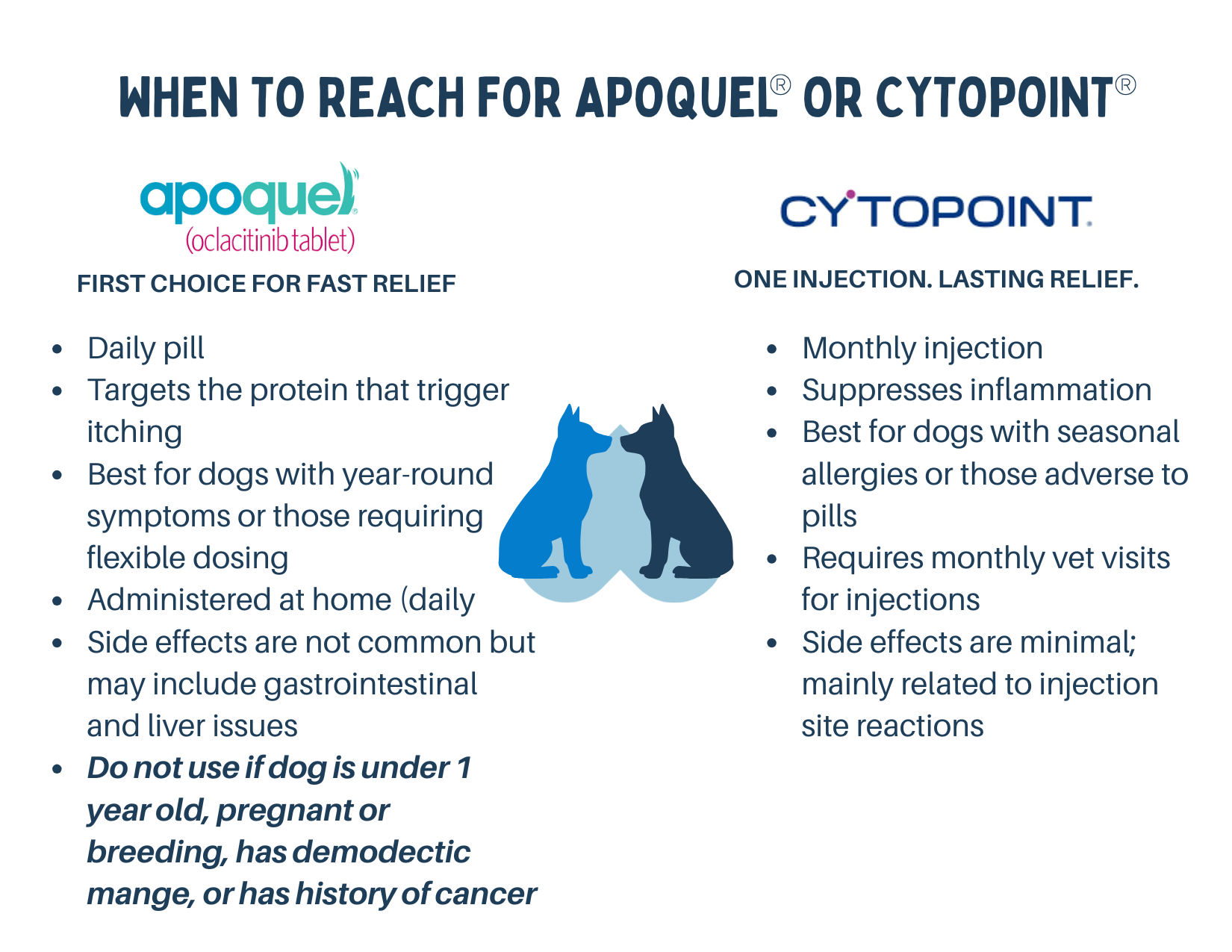
If our veterinarians identify the likely cause is environmental, the next step is managing symptoms and helping your dog feel better quickly.
Two of the most common and effective options for environmental allergy-related itching are:
Apoquel
Daily oral medication
Works quickly to stop itching at the source
Great for year-round allergies or flexible dosing at home
Best for dogs who tolerate pills well
Cytopoint
Monthly injection given by a veterinarian
Targets itch signals in the immune system
Ideal for seasonal allergies or dogs who don’t take pills easily
Long-lasting relief with minimal side effects
So which is right for your dog?
It depends on their lifestyle, allergy type, and what works best for you as a pet owner. Our veterinarians can help guide that decision.
The Bottom Line
Allergies can be frustrating for both you and your dog, but they are very manageable with the right approach. Whether it’s prevention, environmental changes, or medical support like Apoquel or Cytopoint, relief is possible.
If you’re noticing signs of allergies, don’t wait! Getting ahead of symptoms early can make a big difference in your dog’s comfort and overall health. Call us at (540) 344-8707 or email angels@angelsofassisi.org to make a clinic appointment today!
Information via Purina